Alex
Testing (Video 38)
- Go conventions are for files ending in
_test.gofor test files, holdingTestXXXXfunctions (this is similar to theBenchmarkXXXXfunctions for benchmarking) - Tests are run with
go test- Tests aren’t run if the source wasn’t changed since the last test
Layers of Testing
- There are different layers of testing that can be done by developers and testers
- From the top down, we have different types of testing, with the line being drawn somewhere in end-to-end between that which is done by testers and that which is done by developers
- Chaos testing
- System testing
- Performance / load testing
- End-to-end testing
- Integration testing
- Unit testing
- Testing at the developer level can cover many different things:
- Extreme values
- Input validation
- Race conditions
- Error conditions
- Boundary conditions
- Pre and post conditions
- Randomised data (fuzzing)
- Configuration and deployment
- External interfaces to other software
- Developer testing is transparent and fully automated; as developers we know stuff about the software that we can test
Test Functions
- Test functions have the same signature:
func TestCrypto(t *testing.T) {
  // do some tests

  if err != nil {
    t.ErrorF("failed test: %s", err)
  }
}
testing.Tis something you can report errors on
Subtests
- We can run subtests under a parent using
t.Run()
func SomeTest(t *testing.T) {
  table := []struct {
    name string
    param int
    outcome int
  }{
    {name: "test1", param: 1, outcome: 10},
    {name: "test2", param: 3, outcome: 30},
  }
}

for _, st := range table {
  t.Run(st.name, func(t *testing.T) {
    // do the test here
  })
}
- Now we can have nice named subtests parameterised
Nicer Subtest / Parameterised Testing Pattern
- These functions can become a bit cumbersome, so an approach was outlined in the video that looks as follows:
// this is the function we are testing
func someFunctionToTest(input string) bool {
  return len(input) < 5
}

// we define a named type for our parameterised test
type parameterisedTest struct {
  name  string
  input string
  want  bool
}

// we define a run method which we use as our input to t.Run
func (pt parameterisedTest) run(t *testing.T) {
  got := someFunctionToTest(pt.input)
  if pt.want != got {
    t.Errorf("input %v, wanted %v, got %v", pt.input, pt.want, got)
  }
}

// we define our table of tests
var tests = []parameterisedTest{
  {name: "happy", input: "hi", want: true},
  {name: "boundary 1", input: "hello", want: true},
  {name: "boundary 2", input: "helloo", want: false},
}

// now everything is nicely separated in our actual test and is easier to follow
func TestSomeFunctionToTest(t *testing.T) {
  for _, pt := range tests {
    t.Run(pt.name, pt.run)
  }
}
pt.runis a method value! It’s the run method bound toptwhich is the particular parameterised test we are running!- Super neat pattern!!!
Checker Refactoring for Subtests
- We can also parameterise how we check results using a checker interface:
type checker interface {
  check(*testing.T, string, string) bool
}

type subTest struct {
  name string
  shouldFail bool
  checker checker
}

type checkGolden struct { /*...*/ }

func (c checkGolden) check(t *testing.T, got, want string) bool {
  // implement checking logic here
}
Mocking / Faking
- We can define mocks / fakes for things like database interfaces
type DB interface {
  GetThing(string) (string, error)
}

var errShouldFail = errors.New("db should fail")
type mockDB struct {
  shouldFail bool // our mock DB can have forced fail scenarios for testing
}

func (m mockDB) GetThing(key string) (string, error) {
  // mockDB now conforms to the DB interface
  if m.shouldFail {
    // we can force an error case when the flag is set
    return thing{}, fmt.Errorf("%s: %w", key, errShouldFail)
  }
}
- We can use things like in-memory Redis things for testing, whereas for things like Postgres it’s less easy to have an in-memory version because of the complexity of the implementations
TestMain
TestMainandtesting.Mis a way of doing initialisation before running tests, e.g. spinning up a database
func TestMain(m *testing.M) {
  // setup
  setupDatabase()

  // run tests
  rc := m.Run()

  // teardown
  teardownDatabase()

  os.Exit(rc)
}
- Tests will be run when
m.Run()is explicitly invoked - Make sure to perform teardown explicitly before calling
os.Exit(), don’tdefersince defers don’t run afteros.Exit()is called
t.Cleanup
t.Cleanupis a function used to unregister resources created for a test, an alternative to tearing down inTestMain
func TestSomething(t *testing.T) {
  dir := os.MkdirTemp("", "x")
  t.Cleanup(func() { os.RemoveAll(dir) }) // register cleanup function
  // test uses dir...
}
- Semantically
t.Cleanupregistrations are similar todeferexcept they are preferred since from inside helper functions, adeferwould run after the helper is called rather than after the test has completed:
func newServer(t *testing.T) *Server {
  s := startServer()
  t.Cleanup(func(){ s.Close() }) // register cleanup in helper
  return s
}

func TestDoStuff(t *testing.T) {
  s := newServer(t)
  // use s - cleanup happens after test completes
}
Test-only Packages
- Sometimes we want to test a package only from an external interface standpoint; for opaque or black-box tests
- Normally tests will run inside the same package as what they are testing, meaning they get access to internal names
- Creating a separate test package that ends in
_testwill mean you only have access to exported names (functions, constants, structs etc.) from your package- This means you can do black-box testing
Philosophy of Testing
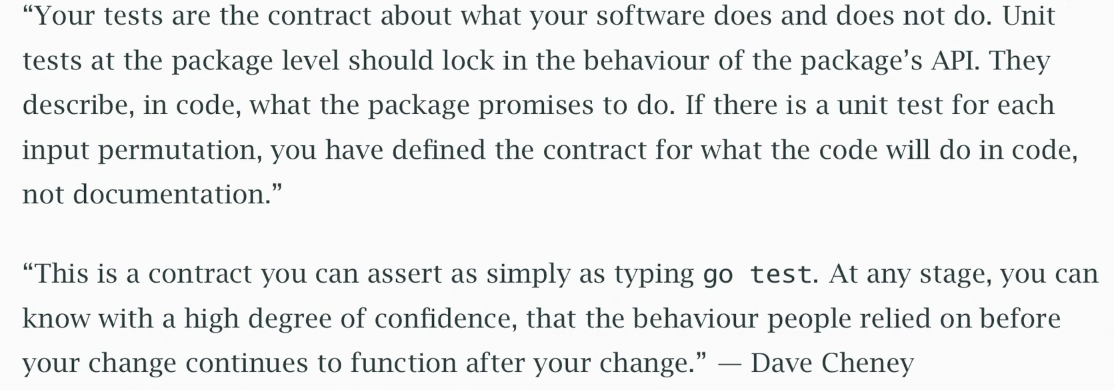
- Unit tests are about defining the behaviour of a package’s API; they define a contract for behaviour concretely rather than potentially incorrectly like documentation
- Well written tests will allow for a high degree of confidence that an API’s behaviour is still correct after some change
- Assume code doesn’t work unless:
- You have tests (unit, integration etc.)
- They work correctly
- You run them
- They pass
- This is just basic code hygiene; start clean - stay clean
- Developer testing is necessary and important - developers should aim for 75%+ coverage, through unit tests, integration tests and post-deployment sanity checks
- Tests can also be part of your documentation if written well